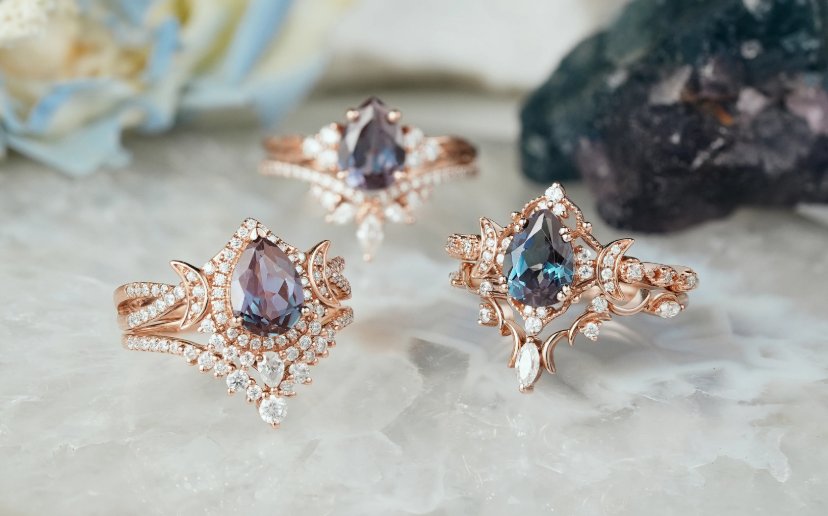
When it comes to engagement rings, most people immediately think of diamonds. However, more couples are seeking unique alternatives that reflect their personal style and individuality. Alexandrite has emerged as a stunning choice for engagement rings due to its rarity, captivating color-changing properties, and durability. Both natural and lab grown alexandrite are gaining popularity in modern jewelry, offering a dazzling option for couples who want something extraordinary.
The Unique Color-Changing Ability
One of the most remarkable features of alexandrite is its ability to change color under different lighting conditions. In daylight, the stone often appears green or bluish-green, while under incandescent light, it can shift to red or purplish-red. This dramatic color change is a natural phenomenon caused by trace amounts of chromium in the gemstone, which selectively absorbs light.
The ability to shift colors makes alexandrite a dynamic and magical choice for engagement rings. It symbolizes adaptability, change, and the multifaceted nature of love. Lab grown alexandrite offers the same captivating color-changing properties as natural stones, but with greater consistency and often more vivid transitions, making it an appealing option for those seeking a flawless appearance.
Rarity and Exclusivity
Natural alexandrite is extremely rare, historically found in Russia and later in locations like Brazil and Sri Lanka. Its scarcity adds an element of exclusivity and luxury to engagement rings. Each natural stone is unique, with its own patterns of color change and inclusions, making every alexandrite engagement ring one-of-a-kind.
For those who want the same beauty and exclusivity without the high cost or scarcity, lab-grown alexandrite provides an excellent alternative. These lab-created stones are chemically identical to natural alexandrite and display the same color-changing magic. They allow couples to choose larger, flawless stones without worrying about the limited supply or the significant price tag of natural gems.
Symbolism and Meaning
Alexandrite carries rich symbolism that makes it meaningful for engagement rings. Traditionally, it is associated with love, luck, and balance. Its dual-color nature represents the harmony between opposites, making it a fitting symbol for two people coming together in marriage. Some also believe that alexandrite enhances intuition, creativity, and emotional balance, adding a spiritual dimension to the ring.
Lab-grown alexandrite shares these symbolic qualities, giving couples the opportunity to celebrate meaning and beauty while embracing a sustainable and ethical choice. Couples who value environmental responsibility may find lab-grown alexandrite particularly appealing, as it eliminates the need for extensive mining while maintaining the stone’s symbolic significance.
Durability for Daily Wear
Engagement rings are worn every day, so durability is a critical consideration. Alexandrite ranks 8.5 on the Mohs scale, making it highly resistant to scratches and ideal for daily wear. It also has good toughness, meaning it is less prone to chipping or breaking compared to softer gemstones like opal or tanzanite.
Lab-grown alexandrite possesses the same hardness and toughness as natural alexandrite, but it is often free from inclusions, which can make it even more resilient for everyday wear. This durability ensures that the ring will maintain its beauty for years, even when exposed to regular use.
Ethical and Sustainable Choice
Modern couples increasingly prioritize ethical and sustainable jewelry choices. Natural alexandrite can sometimes involve mining practices that impact local environments and communities. For environmentally conscious buyers, lab grown alexandrite offers an ethical alternative. Created in controlled laboratory conditions, lab-grown stones have a significantly smaller environmental footprint, require no mining, and are conflict-free. This makes lab-grown alexandrite a responsible choice for couples who care about sustainability and ethical sourcing.
Design Versatility
Alexandrite is a versatile gemstone that can be incorporated into a wide range of engagement ring styles. Its unique color-changing ability complements both classic and modern designs, whether in solitaire settings, halo arrangements, or three-stone rings. The stone pairs beautifully with diamonds, sapphires, and other gemstones, allowing jewelers to create custom designs that reflect the couple’s style.
Lab-grown alexandrite offers additional design flexibility. Because it can be produced in various sizes and with flawless clarity, jewelers can craft intricate settings that showcase the stone’s color-changing magic without worrying about imperfections or limited availability.
See also: Wi-Fi Technology: Past, Present, and Future
Affordability and Accessibility
Natural alexandrite’s rarity makes it expensive, often costing significantly more per carat than diamonds of similar quality. This can limit options for couples looking for a larger stone or elaborate setting. Lab-grown alexandrite, however, is more affordable while maintaining the same visual and physical properties as natural alexandrite. This makes it possible to select larger stones or more elaborate ring designs without exceeding a budget.
Conclusion
Alexandrite is a popular choice for engagement rings due to its extraordinary color-changing properties, rarity, durability, and meaningful symbolism. Both natural and lab grown alexandrite offer stunning visual appeal and wearability, but lab-grown stones provide additional advantages, including flawless quality, ethical production, and affordability.
Whether couples choose natural alexandrite for its historical prestige and uniqueness or lab-grown alexandrite for its beauty, sustainability, and accessibility, this gemstone represents a truly remarkable and personalized option for engagement rings. Its dynamic color, symbolism of balance and love, and suitability for daily wear make alexandrite a standout choice for those looking to celebrate their relationship in a meaningful, eye-catching way.