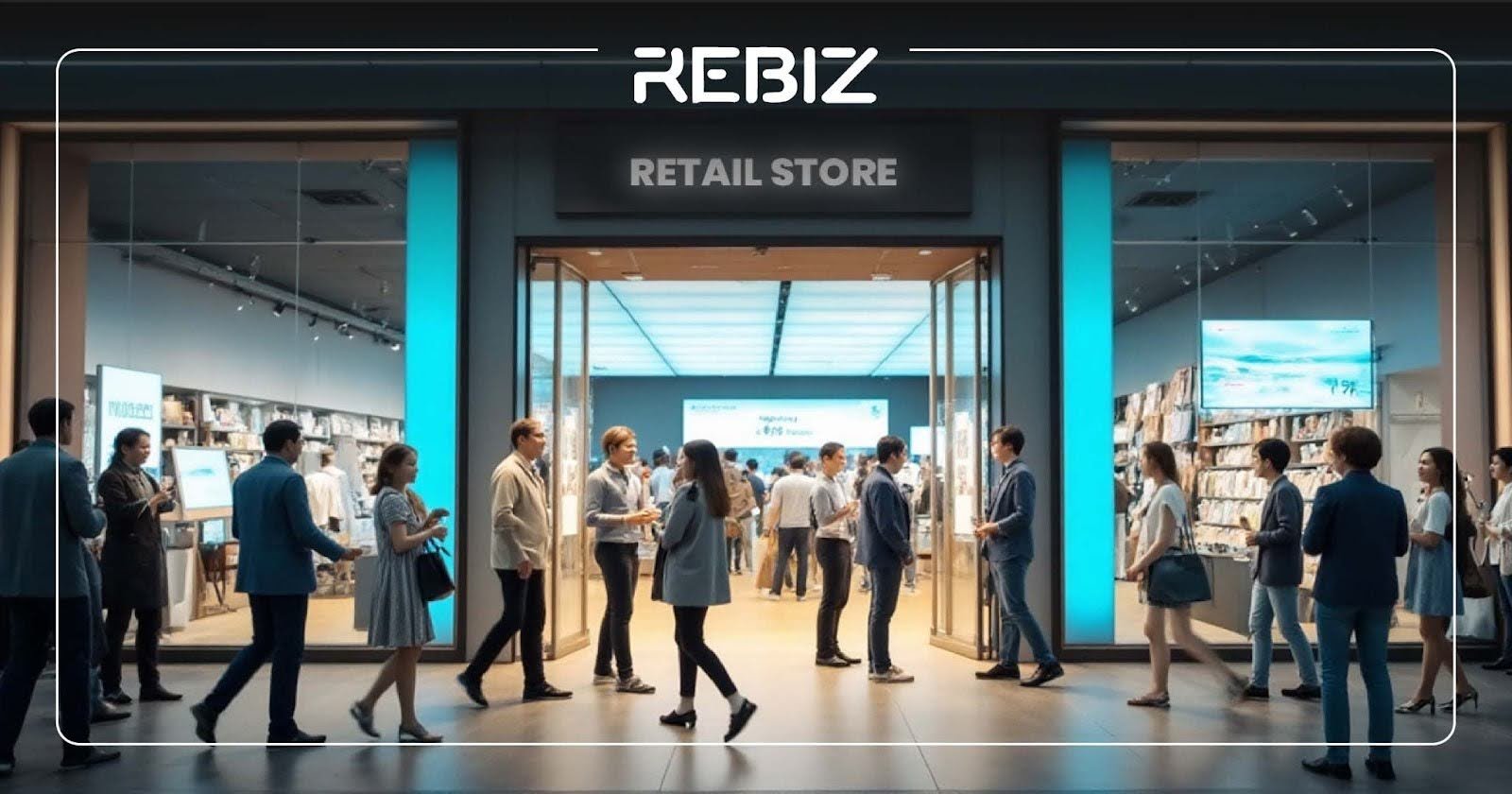
Retail is in the midst of a transformation where data is key to every decision. The traffic counter has been a staple of the e-commerce world since day one, whereby analytics has long been used to measure customer behavior; now its time for physical store frontline sales assistants to catch up thanks to sophisticated retail analytics software. These are no longer a head count of visitors, but an unprecedented real-time tool for how retailers plan, manage and optimize across operations, marketing patterns and customer experience.
This blog discusses how traffic counter metrics are changing retail analytics software tactics and why they’re so necessary for next-level retailers.
The History of Retail Analytics In-Store
Historically, physical retail analytics is overly reliant on sales data. Revenue numbers — which capture performance — hardly tell the “why” behind it. Where they engaged, or how many people had visited or for how long they’d stayed?No one knew.
The tide turned with the arrival of the traffic counter. When combined with retail analytics software, foot traffic counter measurements provide visibility into the full in-store customer path, helping retailers to make data-driven decisions.
Understanding Traffic Counter Metrics
A traffic counter is used to determine or monitor the footfall in a store. Contemporary traffic counters rely on advanced cameras (powered by AI), thermal sensors, infrared beams or wireless signals to accurately collect the data.
Key traffic counter metrics include:
- Total footfall
- Entry and exit counts
- Peak traffic hours
- Dwell time
- Zone-wise movement
Retail analytics application formats these measurements into organized insights that inform strategic planning and actions.
Why You Need a Traffic Counter for Retail Analytics Software
Traffic counter metrics offer a dimension sales data can’t deliver. These metrics are leveraged by retail analytics software to connect store visits with actual purchases.
Retailers can use traffic counter data to:
- Measure store performance objectively
- Notice toileting concerns—either in your layout or your staff complement
- Understand customer engagement patterns
- Matching strategies with in-store reality
These lessons change how you develop and execute your retail analytics software strategy.
Redefining Store Performance Measurement
One of of the key benefits that traffic count metrics can bring is to measure store performance beyond sales.
A traffic counter shows you how many people came into the store, and retail analytics software does some math to compare that data to sales in order to estimate conversion rates. This helps retailers tease out whether low sales are a result of low footfall or poor conversion – two very distinct challenges, requiring often contrasting strategies.
Enhancing Conversion Rate Optimization Strategies
But conversion rate optimization isn’t confined to digital! The traffic counter stats give the retail analytics software exact in store conversion rates.
With a knowledge of what percentages of visitors buy, retailers can:
- Improve product placement
- Refine pricing strategies
- Enhance staff engagement
The use of traffic countener data will help you ensure that your conversion strategies are based on actual, rather than assumed consumer behavior.
Leverage of Dwell Time Stats to Enhance Engagement
In this sense, dwell time can be a great diagnostic of customer interest. A piece of retail analytics software turns this data into a visualization, showing how much time customers spend in your retail space.
How retailers can use dwell time metrics.
- Identify high-interest product zones
- Improve visual merchandising
- Reduce friction in low-engagement areas
This is because data driven retail analytics make it possible for store owners to concentrate more on experience optimization strategies with powerful retail analytics software.
Optimizing Staffing and Operational Planning
Staffing is among the biggest operating expenses in retail. Traffic counter data tells you precisely when the busy and slow times are, so you can staff more efficiently.
What retail analytics software can do with traffic counter data:
- Match staffing with customer flow
- Reduce overstaffing or understaffing
- Optimize service level on peak-time periods
This alignment benefits operational efficiencies and the customer experience.
Measuring Offline Marketing Effectiveness
Offline advertising has been historically hard to quantify. With a retail analytics tool that includes the functionality of a traffic counter, retailers can start to monitor how promotions and campaigns are influencing footfall.
Retailers can use their traffic counter metrics before and after campaigns to:
- Measure marketing effectiveness
- Identify high-performing locations
- Optimize future campaigns
This is a new conception for marketing in the context of retail analytics software.
Read Also: Wi-Fi Technology: Past, Present, and Future
Enabling Data-Driven Store Layout Strategies
Store design is often based on intuition. Instead, traffic counter data takes the guess work out with hard numbers for movement.
Retail analytics software turns traffic counter inputs into heatmaps and flow analysis, allowing retailers to:
- Identify bottlenecks
- Optimize aisle placement
- Improve navigation and accessibility
By being smart about where the data is being used, stores can be designed better and more in favor of the consumer as well.
Rolling Out Retail Analytics Software Protocols to Multiple Locations
For multi-store almanac, consistent is key and benchmarking is everything. Decentralized retail analytics software dashboards are fed by traffic counter metrics from various locations.
Retailers can compare:
- Footfall trends across regions
- Conversion performance by store
- Engagement patterns by layout type
These learnings facilitate more scalable and uniform retail strategy across the chain.
Conclusion
Traffic counter Tables stakes for traffic counter and conversion rates: why people counting software will never be the same again Traffic counter metrics are no longer purely operational—they are strategic assets that are shaping the future of retail analytics software strategies. Translating footfall, dwell time and movement data into actionable intelligence, traffic counters enable retailers to act smarter around performance measurement, marketing, operations and store layouts.
As competition continues to accelerate in retail, using traffic counter data as part of best-in-breed retail analytics software is vital for forming agile, customer-focused and forward-looking strategies.
FAQs
1. Traffic counter metrics in retail, what are they?
Traffic counter data such as footfall, peak hours, dwell time, and motion are utilized by the retail analytics software to study in-store behavior.
2. How do traffic counters refine retail analytics software tactics?
People counting systems deliver hard evidence of human_req and conversion behavior that retail analytics software can utilize to optimize operations and marketing tools.
3. Should traffic counter data be used to improve customer experience?
Yes. Red and best sellers along with tracking congestion, engagement zones and traffic flow enable retailers to create the ideal in-store environment using Traffic Counter data markers.
4. Can we use traffic counters for maulti-store retailers?
Absolutely. Compiled traffic counter stats in retail analytics programs can be used to compare and benchmark performance by strategy between locations.
5. Does retail analytics software even work without a traffic counter?
Retail analytics software is able to analyze sales and inventory data, but adding traffic counts greatly increases the capacity of this system to produce behavioral insights.