Introduction
Engineers and procurement professionals who start with a “near me” search may be unaware that they are entering a mental pitfall: assuming that geographic closeness is directly proportional to reduced communication costs and improved problem-solving efficiency. They may quickly find that the local supplier, only 20 minutes away, is overwhelmed by the technical complexity of the issue, leading to more problematic delays compared to working with a distant supplier. Ironically, the “nearness” may lead to a fresh cost pitfall of excessive, non-productive meetings at the supplier’s site.
The underlying issue is that the decision process is based on the “convenience” level rather than the “capability synergy” level. Decision-makers lack a methodology to drill deeper into the technical depth and process maturity of the local supplier to fully leverage the geographic advantage into a significant acceleration of the project. As a result, the benefits of “localization” remain un-engineered and un-contracted. In this article, the learner will be offered a “Three-Dimensional Local Partner Assessment and Synergy Framework” based on 2026 best practices to reduce supplier mismatch risks by 40%.
What Constitutes a “True” Local Advantage? It’s Engineering, Not Just Logistics.
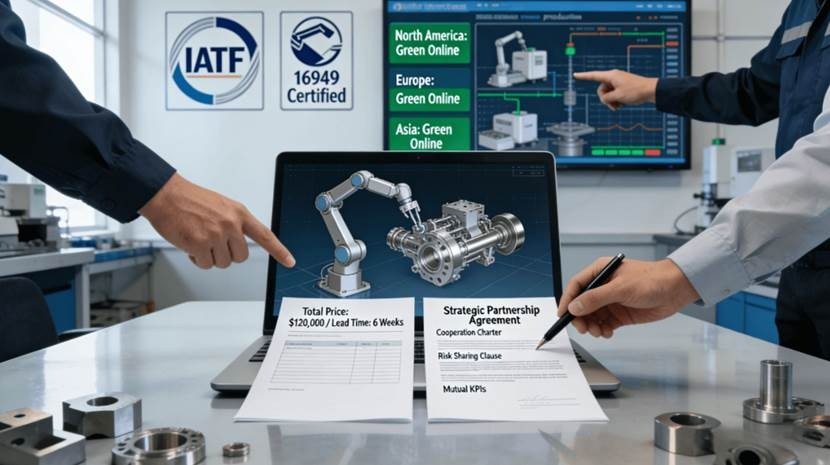
The first step is to understand what the true composition of a “local advantage” is. It’s an engineering multiplier, not just a logistics advantage. While reduced shipping times are part of the advantage, the “true” local advantage should include three engineered components. The first is a “compressed design verification loop” that enables same-day review and next-day prototype availability for physical iteration. The second is a “pre-defined on-site problem solving protocol” that enables your engineers to “walk in and review their failed part alongside ours on the CMM.” The third is a “shared supply chain buffer” where their local raw material inventory can be used as a contingency for your project.
1. The Digital Thread in a Local Context
This partnership with a strong personal contact is the closure of the digital thread in the physical world. Smart manufacturing frameworks, like those suggested by the National Institute of Standards and Technology (NIST), emphasize the role of data flow and activity coordination across the product lifecycle. An efficient local collaboration facilitates a real-time, two-way flow of data and personnel to transform digital designs into physical parts with the shortest possible time and maximum feedback, which is a major aspect of advanced Engineering Collaboration Strategies.
2. Protocolizing Proximity for Predictable Outcomes
While proximity represents potential, protocol represents performance. The advantage needs to be protocolized. This means establishing rules on when an “all hands” meeting should be called within 4 hours, the frequency with which production dashboard data should be shared, and which milestones (such as First Article Inspection) should trigger a face-to-face review. Without these interaction protocols, the advantage of speed provided by being local simply leads to inefficient communication.
3. From Convenience to Strategic Capacity
So, the process of evaluating a local partner is one of auditing their capacity for deep integration. It’s the process of determining whether they have the capacity, the culture, and the willingness to become a seamless extension of your engineering team. In this way, they shift from being a conveniently located machine shop to a strategic capacity multiplier. A deep understanding of this process is one that you can attain from the 2026 Learning Guide: 5-axis CNC machining services near me.
How to Audit a Machine Shop’s “Living” Technical Library, Not Just Its Equipment List?
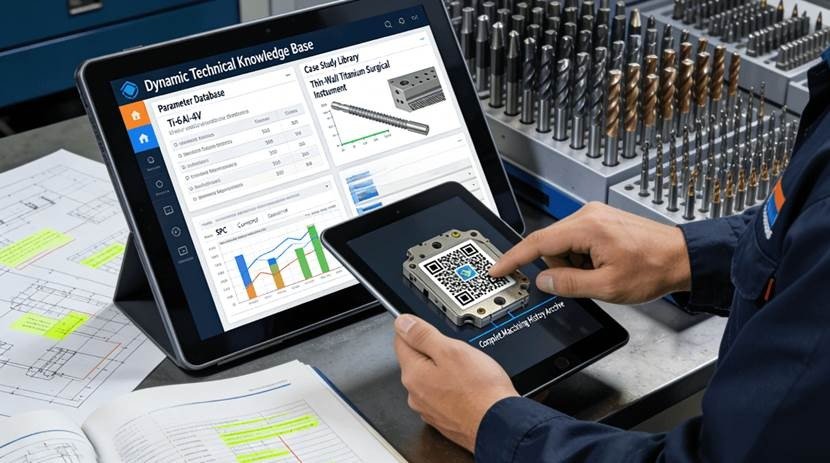
A machine shop’s list of machine tools is useless as a way to evaluate their capacity to solve your particular problem. What you want to audit is their “living” technical library. What this means is that rather than asking the machine shop what machine tools they possess, ask to see their parameter database and their library of case studies on materials that are typical in your area, such as 6061 aluminum or 4140 steel.
1. Evidence of Knowledge Capture and Reuse
A shop that learns is one that has evidence of that process. Look for proof that they capture their learning process. Are there post-mortem reports detailing the challenges they overcame, updated work instructions, and standardized setup sheets? This is evidence that they take the knowledge of their individual machinists and turn it into institutional knowledge. Thus, the solution to your complex titanium part is not dependent on the individual machinist’s recollection but on a process that is repeatable.
2. Assessing Technical Adaptability and Skill Depth
Ask the shop how they would approach the unknown. “My next part is going to be a new copper-nickel alloy that we’re considering. What’s your process for determining the machining parameters from scratch?” What they tell you should be a scientific, methodical process based on research, small-scale test coupons, toolpath simulation, and data collection. Don’t worry about their certification process; worry about their basic skill development process.
3. The Tools for Consistent Execution
And finally, audit the tools for consistency. Do they use statistical process controls for critical dimensions? Is there a formal First Article Inspection process that creates a complete report, rather than a simple “pass/fail” result? These are the Precision Engineering Resources and tools that will ensure that brilliant solution created through a collaborative meeting room effort will be executed flawlessly on the shop floor, time and again. This systematic approach to capability is what will set a precision 5-axis machining service ahead of the pack.
Can “Being Close” Guarantee Faster Solutions? Designing the Collaboration Protocol
Geography is a necessary precursor, but a collaboration protocol will be the catalyst. To ensure that “being close” equates to velocity, a collaboration protocol must be co-created with your partner. This protocol should explicitly define three elements. First, the Emergency Response Channel. What critical non-conformance will trigger a mandatory on-site War Room meeting within a specified time frame, say 4 hours?
l Defining Information Transparency and Flow: Secondly, define the Information Sharing Tier. What information will be shared, when, and on what platform will it be shared? This could be real-time access to a production status dashboard, daily yield reports, or weekly SPC chart reviews for your parts. Uncertainty has no place when transparency is used as a countermeasure.
l Mandating Joint Milestone Reviews: Thirdly, implement the Mandatory Joint Review Nodes. Critical elements of a project, such as design freeze, first article, process validation, and production ramp-up, should be set up to include a mandatory review. These are not status review meetings; these are work meetings to facilitate joint decision-making. This will ensure both sides are synchronized and leveraged for mutual benefit at all critical inflection points.
l The Protocol as a Risk Mitigation Tool: This protocol changes the partnership from reactive to proactive. It’s like pre-negotiating how to deal with the inevitable problems that will come up. It’s pre-negotiating how to work together when things go wrong. It’s ensuring that everyone has the same rhythm with which to work. It’s the process of moving from thoughtful assessment to reliable, high-volume output, however, that requires a partner with experience in complex process and project management – the hallmark of a true precision 5 axis CNC machining services provider.
See also: Advertise a Business Through Influencer Marketing for Authentic Reach
The Learning Case Study: From a “Nearby Nightmare” to a “Co-Engineered Success”
Let’s assume we are tasked with providing an educational case study. Our client – a surgical robotics firm – has a need for a complex titanium part. Their first instinct is to go with the firm that’s geographically closest to their offices. That firm, however, isn’t sufficiently knowledgeable to deliver the tight tolerance, thin wall features required, causing a 6-week delay. The partnership ends. A new partner is brought in using the above framework.
1. Application of the Framework: The Assessment Phase
The new selection process was an audit rather than an interview. The chosen partner had, through deep technical discussion, offered a validated parameter list for Ti-6Al-4V as well as a portfolio of other complex medical components of a similar nature. The quality system, built around IATF 16949, offered a common language for control plans and production part approvals. This ensured a formalized hand-off from the start of the project.
2. The Protocol in Action: The Co-Engineering Phase
A collaboration protocol was put in place. This included weekly joint sessions on design for manufacturability, a 24-hour response time for engineering change requests, and a commitment to maintain a buffer stock of this particular alloy of titanium. The first prototype had a minor problem with vibration. The emergency protocol was put in place. Engineers from both firms met at the CMM within hours to discuss the problem and then to put in place a solution to this problem.
3. The Quantifiable Outcome
The end result was a transformation. The 6-week risk period had been reduced to a 72-hour solution cycle. The part had met all specifications, and the partnership model that had been created had become the blueprint for future parts. This case represents a best practice for an Industrial Technology Tutorials. It shows that the local partner, when selected and utilized through a disciplined process, can be a transformational event for a company’s strategy, not just a convenience.
The Learner’s & Manager’s Checklist: 5 Questions to Turn a Vendor Visit into a Learning Audit
Whether you are a student on a field trip or a manager during a selection process, you can transform a sales pitch into an educational audit. To discover the truth, here are five questions to ask. The first one is, request a demonstration of process efficiencies. “Could you show me the whole timeline and communication log from problem identification to the closed-loop corrective action of a recent project?”
1. Testing Adaptability and Strategic Thinking
Second, ask about their learning and adaptation processes. “If my next design requires a material you’ve never worked with before, what’s your step-by-step technical evaluation and prototyping process?” This line of questioning checks for a structured R&D process. Third, ask about their strategic thinking. “Can we co-develop 3 to 5 Key Performance Indicators to measure the success of this ‘local partnership’ beyond on-time delivery?” This could include metrics like engineering change order response time or cost of quality. This line of questioning shifts the discussion from a transactional to a partnering relationship.
H3: 2. Evaluating Cultural and Systemic Readiness
The responses to these questions reveal the suppliers’ operating system. Are they, for instance, a company that regularly engages in transparency and continuous improvements? (These aspects are quite prevalent in the literature about manufacturing, skills, and knowledge management. ) A supplier that is open to these questions and at the same time can provide you with a substantive and evidential type of response, suggests a strong maturity level for a robust co-engineering relationship.
3. Building Your Own Evaluation Muscle
These queries help you develop analytical critique skills, which is a great way of getting past the great advertising material and exploring deeper into a partner’s culture and capabilities. In fact, that’s precisely the kind of method that the Society of Manufacturing Engineers (SME) advocates as being systematic and knowledge driven. When you implement such a structured framework, you are not only effectively reducing the risks of the projects but also increasing the value of the partnership. This way, you’ll be able to pick a 5-axis machining company that will become an integral part of your team and work with you to tackle custom machining challenges.
Conclusion
As a conclusion to this article, it is safe to say that in today’s manufacturing environment, in which resilience, adaptability, and collaboration are paramount, partnering with a local 5-axis CNC machine company has moved beyond a geographic search to a skill that must be mastered in terms of a structured protocol. By mastering a framework in terms of depth, process, and collaboration engineering, engineers and supply chain managers can turn “localization” into a measurable, manageable competitive advantage. This is not about finding a partner; it’s about building a critical supply chain capability.
FAQs
Q: As a student or early-career engineer, how can I practically apply this framework if I don’t have the authority to select suppliers yet?
A: As an intern, tour, or interview, utilize the framework as an educational tool. Ask yourself these questions and compare how companies operate. This will give you data-backed insights, making you an invaluable contributor on day one, knowing what really drives manufacturing excellence.
Q: What is the biggest blunder companies make when they attempt to leverage a local manufacturing partner?
A: The biggest blunder companies make when they attempt to leverage a local manufacturing partner is they never formalize the “how” of the collaboration. They assume the proximity of the supplier solves the communication problem. Without engineering the “how” of the collaboration, the delays still occur. They just occur face-to-face.
Q: How might I gauge the commitment level of a potential partner to continuous improvement and staying technically current?
A: A commitment to structured learning. Do they have a budget for training? Have they recently upskilled their staff on new CAM software or metrology tools? Do they have a budget for R&D to test new materials or processes? A partner committed to their knowledge base is a partner committed to their future ability to solve your complex problems for you.
Q: Realistically, might a local machine shop want to share production details with me?
A: Realistically, yes, for a true strategic partnership with a mutually agreed-upon NDA. There should be a discussion of access to key metrics for your project, such as real-time order status, inspection reports for your first article, and SPC charts for your key features.
Q: How does the cost model typically vary between a transactional local supplier and a strategic local partner?
A: The quote from a transactional local supplier will be based on a price per part. The quote from a strategic local partner will include a price per part, which may be a little higher, or engineering time. However, the Total Cost of Ownership will be dramatically lower due to huge savings on risks, delays, reworks, and administration. Never compare costs on a per-part basis.
Author Bio
The content of this article draws upon practical experience and the essence of pedagogical theory derived from building a deeply localized manufacturing ecosystem — one that is rooted in the local context yet serves high-end manufacturing clients globally. The insights presented herein elevate the inherently challenging task of “supplier selection” into a specialized discipline that is both teachable and learnable. As a certified manufacturing partner, LS Manufacturing is dedicated not only to fostering deep collaboration but also to empowering the next generation of engineers and supply chain professionals, equipping them with the tools and capabilities necessary to forge world-class manufacturing partnerships.