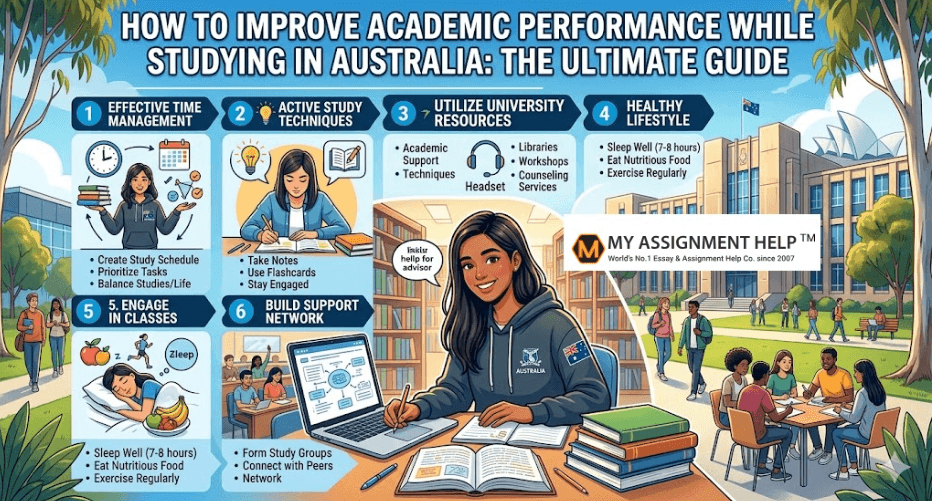
Studying in Australia offers a world-class educational experience, vibrant multicultural cities, and breathtaking landscapes. Whether you are an international student adjusting to a new culture or a domestic student transitioning from high school to higher education, navigating a practical vocational course at TAFE or tackling a demanding undergraduate or postgraduate degree at a top Australian university can be highly rewarding yet incredibly challenging.
The Australian higher education system places a heavy emphasis on critical thinking, independent research, practical application, continuous assessment, and strict academic integrity. For many students, balancing complex assignments, intensive laboratory reports, weekly lectures, part-time work, and a healthy social life can feel like a high-wire act.
If you want to lift your Grade Point Average (GPA), secure those elusive High Distinctions (HDs), or simply survive your semester workloads without burning out, you need a strategic approach. Here is an actionable, comprehensive guide on how to improve academic performance in university and higher education settings while studying in Australia.
1. Understand the Australian Assessment Framework and Grading Systems
To excel in any educational system, you must first understand its foundational rules. Uniquely, the Australian higher education model heavily utilizes continuous assessment. This means every weekly quiz, oral presentation, case study, and mid-term essay directly influences your final outcomes. You cannot afford to neglect early-semester tasks because they carry significant weight toward your final unit marks.
If you find yourself struggling to balance these ongoing requirements right out of the gate, seeking coursework help can give you the structured assistance needed to stay ahead of tight deadlines.
Decoding Higher Education Grading (TAFE & Universities)
In Australian universities, your final grade for a unit is typically broken down into multiple components. The grading scale itself is unique, highly rigorous, and differs significantly from the GPA or percentage frameworks used in the US or UK:
| Grade | Percentage Range | Academic Expectations |
| High Distinction (HD) | 85% and above | Demonstrates exceptional, original thinking and flawless execution. |
| Distinction (D) | 75% – 84% | Shows advanced understanding, critical analysis, and extensive research. |
| Credit (C) | 65% – 74% | Demonstrates a solid, competent grasp of the subject matter. |
| Pass (P) | 50% – 64% | Meets the minimum baseline requirements of the unit. |
| Fail (F) | Below 50% | Does not meet the minimum learning outcomes. |
Action Plan: Master the Marking Rubric
Familiarize yourself with your institution’s digital library guides, which offer comprehensive, interactive citation examples for every source type imaginable. Additionally, leverage referencing management software like EndNote, Zotero, or Mendeley to organize your research papers and generate accurate bibliographies automatically.
If you ever find yourself overwhelmed by complex research frameworks, structural requirements, or referencing compliance, utilizing specialized academic platforms like Myassignmenthelp to master academic referencing styles can provide you with the tailored guidance needed to ensure your submissions meet top-tier Australian university standards.
2. Decode the Art of Academic Referencing and Integrity
One of the biggest culture shocks for international students—and a major hurdle for domestic students entering university—is the absolute strictness of academic integrity in Australia. Institutions maintain zero-tolerance policies toward plagiarism, collusion, and contract cheating. Universities utilize advanced text-matching software like Turnitin and closely monitor compliance. Plagiarism, even if entirely accidental due to poor paraphrasing, can result in severe academic penalties, including an automatic zero, failing the unit, or permanent expulsion.
Australian institutions utilize various referencing styles depending on your specific faculty or discipline:
- APA 7th: The gold standard in psychology, social sciences, business, and education.
- Harvard: Widely used across business, management, and general science faculties.
- AGLC4 (Australian Guide to Legal Citation): A highly specialized, footnote-based system mandatory for law students.
- IEEE or Vancouver: Preferred for engineering, IT, and medical science streams.
Action Plan: Use Institutional Tools and External Support
Familiarize yourself with your institution’s digital library guides, which offer comprehensive, interactive citation examples for every source type imaginable. Additionally, leverage referencing management software like EndNote, Zotero, or Mendeley to organize your research papers and generate accurate bibliographies automatically.
If you ever find yourself overwhelmed by complex research frameworks, structural requirements, or referencing compliance, utilizing specialized academic platforms to master academic referencing styles can provide you with the tailored guidance needed to ensure your submissions meet top-tier Australian university standards.
3. Implement Active Learning and Evidence-Based Time Management
Procrastination is the ultimate enemy of academic success. Pulling an “all-nighter” right before a 3,000-word analytical essay is due rarely results in a high grade in Australia, where analytical depth, structured arguments, and polished formatting require systematic time investment.
The Pomodoro Technique and Time-Blocking
To maintain intense focus without suffering from cognitive fatigue, divide your study sessions into structured intervals. Study intensely for 25 minutes (with all digital distractions, phone notifications, and social media turned off), followed by a 5-minute break. After completing four consecutive cycles, take a longer 30-minute break to stretch, hydrate, or walk.
Combine this technique with Time-Blocking on your digital calendar. Instead of writing a vague, overwhelming to-do list, schedule specific hours of your day for independent research, draft writing, exercise, and leisure. Treat these study blocks as non-negotiable appointments.
Active Recall vs. Passive Reading
Simply highlighting a textbook or passively re-reading lecture slides gives a false illusion of competence. To truly embed information into your long-term memory for final exams, you must force your brain to retrieve information actively:
- Anki or Quizlet: Create digital flashcards for key definitions, case studies, legal precedents, and formulas. Use spaced repetition settings to review them just as you are about to forget them.
- The Feynman Technique: Try to explain a complex topic or academic theory in simple terms to a peer, or aloud to yourself, without looking at your notes. If you hit a bottleneck, return to your reading to patch the gap.
- Past Exam Papers: Complete past exam papers under timed, realistic conditions to build exam stamina and significantly reduce test anxiety.
4. Leverage University Support Ecosystems
Many students suffer in silence, unaware that Australian educational institutions spend millions of dollars annually on student support services. Asking for help is not a sign of academic weakness; it is a fundamental trait of highly successful students who know how to optimize their resources.
PASS Sessions (Peer Assisted Study Sessions)
Many Australian universities run PASS or PAL (Peer Assisted Learning) programs for historically challenging units. These are weekly, interactive, collaborative study sessions led by high-achieving students who have previously excelled in that exact unit. Attending these sessions helps clarify complex lecture topics and gives you practical, insider insight into what examiners look for during grading.
Academic Skills Units
Most campuses feature a dedicated Academic Skills Office. They offer free workshops, one-on-one consultations, and drop-in sessions where professional educators review your essay drafts, give feedback on your argument structure, and help refine your academic English writing skills.
5. Balance Part-Time Work and Academic Responsibilities
For many students in Australia, part-time or casual work is a financial necessity to cover living expenses and tuition. Under Australian visa regulations, international students can work up to 48 hours per fortnight during study terms and unlimited hours during scheduled semester breaks. However, working too close to the limit can quickly degrade your classroom performance.
To maintain a healthy GPA, you must allocate your time realistically. Consider the ideal breakdown of a student’s weekly routine:
[ 168 Hours in a Week ]
│
├─► Sleep & Recovery (56 hours)
├─► University Classes & Independent Study (40 hours)
├─► Part-Time Work (20-24 hours)
└─► Social, Fitness, Meal Prep & Commuting (48-52 hours)
Action Plan: Establish Firm Boundaries
- Prioritize Peak Periods: Inform your employer well in advance (at least 2–3 weeks) about your mid-semester exam dates and major assignment deadlines so you can reduce your casual shifts during high-pressure weeks.
- Know Your Rights: Ensure you are being paid lawful Australian award rates. Underpayment or stressful working environments can severely drain your mental energy, directly impacting your cognitive capacity and focus.
6. Maximize the Use of Digital Academic Libraries
A major differentiator between a credit-level student and a High Distinction-level student is the quality of their source material. Wikipedia, random blogs, or non-peer-reviewed articles will not cut it in higher education assessments.
Navigating University Databases
Make your institution’s digital library portal your browser homepage. Learn how to use advanced Boolean search operators (AND, OR, NOT) to filter your searches precisely. Look for peer-reviewed journal articles across trusted databases such as:
- Google Scholar: Ensure you link it to your institutional library in the settings for seamless full-text access to paywalled articles.
- Scopus & Web of Science: Ideal for multi-disciplinary, high-impact research papers.
- PubMed: The ultimate repository for health, medicine, and biomedical sciences.
- JSTOR: Excellent for the humanities, literature, and history.
Always filter your search results to look for recent publications—ideally within the last 5 to 10 years—to ensure your academic arguments are built on contemporary discourse.
7. Master English for Academic Purposes (EAP)
If English is your second language, expressing complex analytical ideas clearly can be incredibly daunting. Even native English speakers often struggle with the formal, objective, and cautious tone required in Australian academic writing.
Tips for Enhancing Academic Vocabulary:
- Avoid Colloquialisms: Replace casual phrases with academic equivalents. Instead of writing “things looked bad,” use “the empirical data indicated a significant decline.”
- Write Objectively: Avoid first-person pronouns (I, we, my) unless you are writing a reflective journal entry. Instead of saying “I think this theory is wrong,” use evidence-backed phrases like “Evidence suggests that this framework possesses limitations.”
- Proofreading Tools: Utilize grammar checkers like Grammarly or Hemingway Editor to catch structural flaws, passive voice issues, and punctuation errors before final submission.
8. Prioritize Mental Health and Physical Well-being
Your brain cannot function at its academic peak if your body is neglected. The pressure to succeed, homesickness, and financial stress can trigger anxiety and burnout, which directly impairs cognitive performance, memory retention, and overall focus.
The Foundation of Academic Success
- Sleep Hygiene: Aim for 7 to 8 hours of sleep per night. Sleep is when your brain consolidates short-term memories into long-term retention.
- Stay Active: Take advantage of Australia’s pleasant climate and excellent outdoor facilities. Physical exercise reduces stress hormones and boosts neuroplasticity.
- Dietary Habits: Nourish your brain with a balanced diet rich in omega-3 fatty acids, whole grains, and fresh local Australian produce.
If you ever feel overwhelmed by your academic workload, reach out immediately to your institution’s free, confidential counseling services or national organizations like Lifeline (13 11 14) or Beyond Blue.
See also: Top 5 Easy to Use Scheduling Software for Driving Lesson Businesses
Frequently Asked Questions
Q.1 What is a passing grade at an Australian university?
In the Australian higher education system, a passing grade (P) is achieved with a score between 50% and 64%. Scoring below 50% constitutes a Fail (F). To stay academically secure and ensure a competitive transcript for future career paths, aim to keep your marks within the Credit (65%–74%) or Distinction (75%–84%) bands.
Q.2 How can international students effectively balance part-time work and study in Australia?
The most reliable way is to build strict time-blocks for your coursework early in the week. Ensure you explicitly track the student visa cap (48 hours per fortnight). Communicate your critical assessment dates to your employer at least two to three weeks in advance to avoid shifts piling up during peak periods.
Q.3 Why are academic integrity standards so strict in Australian education?
Institutions maintain rigorous academic integrity rules to protect the professional value of their qualifications. Universities use complex data-matching software like Turnitin to identify unoriginal writing or improper citations. Violating these standards can lead to zero marks for an assignment, mandatory unit failure, or suspension.
Q.4 What is the best strategy to improve academic performance in university environments?
The single most transformative strategy is mastering the marking rubric provided in your unit outline. Rather than waiting until exam periods to cram, successful students approach coursework iteratively—utilizing active recall habits, consulting with campus Academic Skills offices, and sourcing high-impact peer-reviewed literature through digital academic databases.
Conclusion: Consistency Trumps Intensity
Improving your academic performance while studying in Australia isn’t about locked-away talent or luck; it is about building sustainable, daily habits. Success is built in the structured choices you make: reading the assignment rubric weeks before the deadline, dedicating a few focused hours to active study every day, utilizing library databases effectively, and knowing when to reach out for professional support.
By applying these targeted strategies, you will not only drastically reduce your stress levels around exam periods but also unlock your full academic potential—paving the way for an incredibly successful educational journey and future career opportunities down under.
About the Author – Drake Miller
I contribute educational blogs for Myassignment.services, focusing on academic guidance, student productivity and modern learning practices. His content is crafted to provide students with practical insights, effective study methods, and reliable support for handling assignments, coursework and everyday academic responsibilities more efficiently throughout their educational journey.